

Happy Ganesha Chaturthi – A Living Symbol of Indian Thought : Ganesha is not merely a symbol of devotion, but a profound representation of wisdom, intelligence, creativity, strength and harmony in Indian thought. His unique form and symbolism offer timeless lessons on overcoming obstacles, finding inner balance, respecting nature and beginning every journey with clarity and confidence.
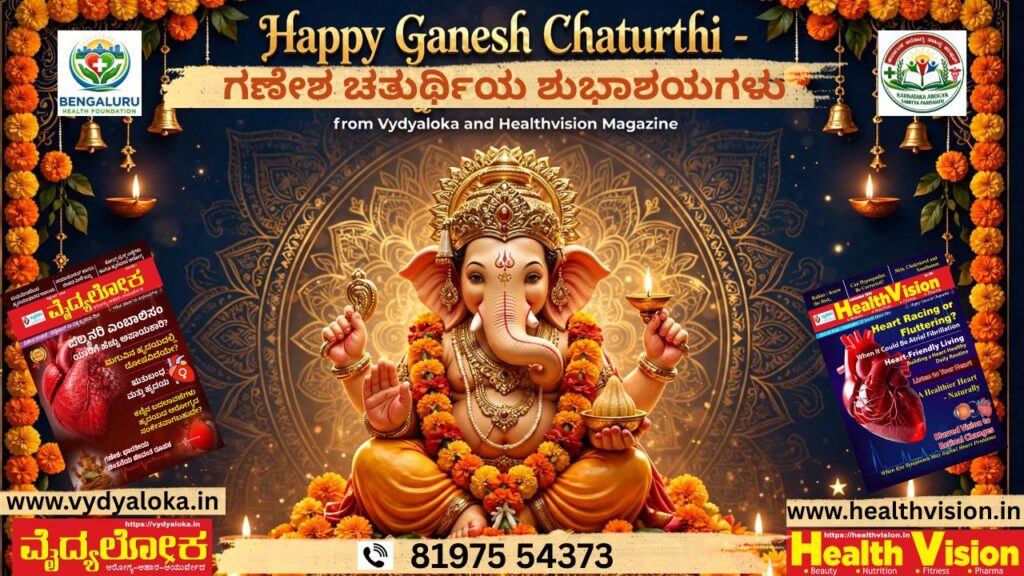
“Vakratunda Mahakaya…” is a prayer familiar to almost every Indian. Whether it is the beginning of education, a new business, an artistic performance or any auspicious occasion, Lord Ganesha is remembered first. He is worshipped not merely as the remover of obstacles, but also as a symbol of wisdom, intelligence, creativity, balance and self-confidence.
Ganesha represents much more than religious faith. His image brings together centuries of Indian philosophy, spirituality, psychology, art, environmental awareness and agricultural culture. To understand Ganesha is not simply to look at an idol; it is to understand an important part of India’s intellectual and cultural heritage.
A God for Everyone
Despite India’s diversity of language, region and tradition, Ganesha is loved and worshipped everywhere. From simple village shrines to magnificent urban celebrations, from a child’s drawing to the work of great sculptors, Ganesha appears in countless forms. His universal appeal lies in his ability to connect people and cultures.
The form of Ganesha itself is fascinating. An elephant’s head, a human body, a single tusk, a large stomach, a small mouse as his vehicle and a modak in his hand create an image that brings a smile rather than fear. His form teaches through humour and symbolism. It gently reminds human beings that no matter how powerful or intelligent we may be, we remain a part of nature.
Ganesha and the Sacred Sound of Om
In Indian philosophy, “Om” is regarded as the primordial sound and a symbol of universal consciousness. Ganesha is often associated with this sacred sound and is called Pranava Swarupi. His worship can therefore also be understood as an inner journey towards mental stability, clarity and wisdom.
When the mind becomes calm, our thinking becomes clearer and our decisions become wiser. Thus, Ganesha worship is not only about offering flowers and fruits; it can also represent the practice of overcoming inner confusion and awakening intelligence.
Symbol of Strength and Stability
In yogic tradition, Ganesha is associated with the Muladhara Chakra, representing the foundation of stability, security and self-confidence. Just as a building requires a strong foundation, human life too requires emotional and mental stability before higher achievements can be reached.
This explains why Ganesha is worshipped before new beginnings. Every new journey requires courage, confidence and a clear mind, and Ganesha symbolises these qualities.
Nature, Agriculture and Sustainability
The sacred durva grass offered to Ganesha represents resilience. Though small and common, it grows again even after being repeatedly cut or trampled. It symbolises the strength to recover from difficulties.
Traditionally, Ganesha idols were made from natural clay and returned to water after the festival. This reflects an important ecological principle: what comes from nature must ultimately return to nature. Today, eco-friendly celebrations using clay idols, natural colours and minimal pollution can help restore the true spirit of the festival.
From Household Worship to Public Unity
In the late nineteenth century, Lokmanya Bal Gangadhar Tilak transformed Ganesh celebrations into a public festival that encouraged social unity and national consciousness during British rule. The festival thus became more than a religious celebration; it became a platform for cultural identity and collective action.
The True Meaning of Ganesha Worship
Ganesha is a living symbol of Indian thought, creativity, philosophy and harmony. True worship is not limited to rituals. It means overcoming ego, removing ignorance, awakening wisdom, respecting nature and promoting unity.
The ultimate purpose of Ganesha worship is not merely the removal of obstacles, but the awakening of viveka—wisdom and discrimination. Obstacles will always arise in life, but a mind filled with courage, balance and wisdom can overcome them.
“Om Gam Ganapataye Namah” is therefore not merely a mantra; it is an eternal invitation to awaken the light within ourselves.

Dr. Gururaj Poshettihalli
Cultural Thinker, Bengaluru