
Myopia in school-going children is a silent but serious vision problem that can affect learning and quality of life. With early detection, proper treatment, and healthy lifestyle habits, children can enjoy clear vision and a brighter future.
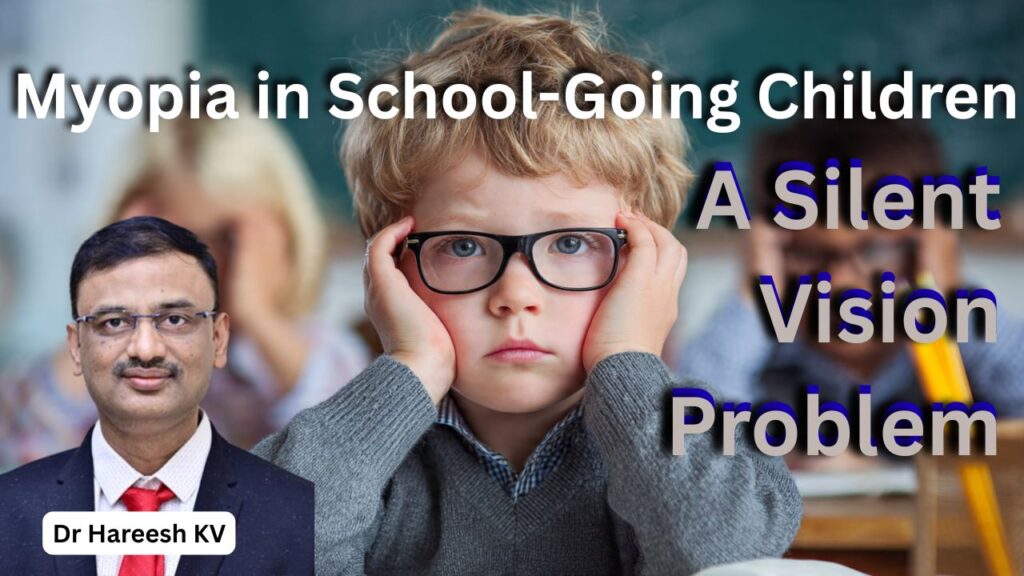
Myopia, commonly known as short-sightedness, is a growing eye problem among school-going children. A child with myopia can see nearby objects clearly, but distant objects like the blackboard, classroom charts, or playground signs appear blurry. Because this problem develops slowly, many children do not complain, making myopia a silent vision problem that often goes unnoticed.
Why Is Myopia Increasing in Children?
• Excessive screen time on mobiles, tablets, computers, and televisions
• Less outdoor play and reduced exposure to natural sunlight
• Prolonged reading or writing without proper breaks
• Poor lighting while studying
• Family history of myopia
Children today spend more time indoors with screens and books, which puts extra strain on their eyes.
Signs and Symptoms Parents Should Watch For
Children often do not realize they have vision problems. Parents and teachers should look for these warning signs:
• Sitting very close to the TV or holding books too close
• Difficulty seeing the blackboard
• Squinting or narrowing the eyes to see clearly
• Frequent headaches or eye strain
• Rubbing eyes often
• Poor academic performance or lack of interest in studies
Early detection can prevent further worsening of vision.
How Myopia Affects a Child’s Life
If left untreated, myopia can affect a child’s learning, confidence, and overall development. Poor vision may lead to:
• Difficulty in schoolwork
• Reduced participation in sports and outdoor activities
• Low self-esteem
• Increased risk of severe eye problems later in life
Severe or progressive myopia can increase the risk of retinal problems, glaucoma, and early cataracts in adulthood.
Diagnosis and Treatment
• Prescription spectacles – the most common and effective solution
• Contact lenses (for older children, under supervision)
• Myopia control lenses or special glasses to slow progression
• Regular eye check-ups to monitor changes in vision
Can Myopia Be Prevented or Controlled?
While myopia cannot always be prevented, its progression can be slowed with healthy habits:
• Encourage at least 1–2 hours of outdoor play daily
• Follow the 20-20-20 rule: every 20 minutes, look at something 20 feet away for 20 seconds
• Maintain proper reading distance and posture
• Ensure good lighting while studying
• Limit unnecessary screen time
• Schedule regular eye check-ups, especially for school children
Also read articles of Dr Hareesh K V

Dr Hareesh K V
Medical director
Abhishek Nethradhama
Krupa Bindu, No.971/37, Mig 15Th A Cross, A Sector
Khb High Rise Apartment
Ambedkar Colony, Yelahanka New town
Bengaluru -64
Ph: 080-4093 3219/77957 15203
Eye Hospital in Yelahanka new town – Abhishek Nethradhama