
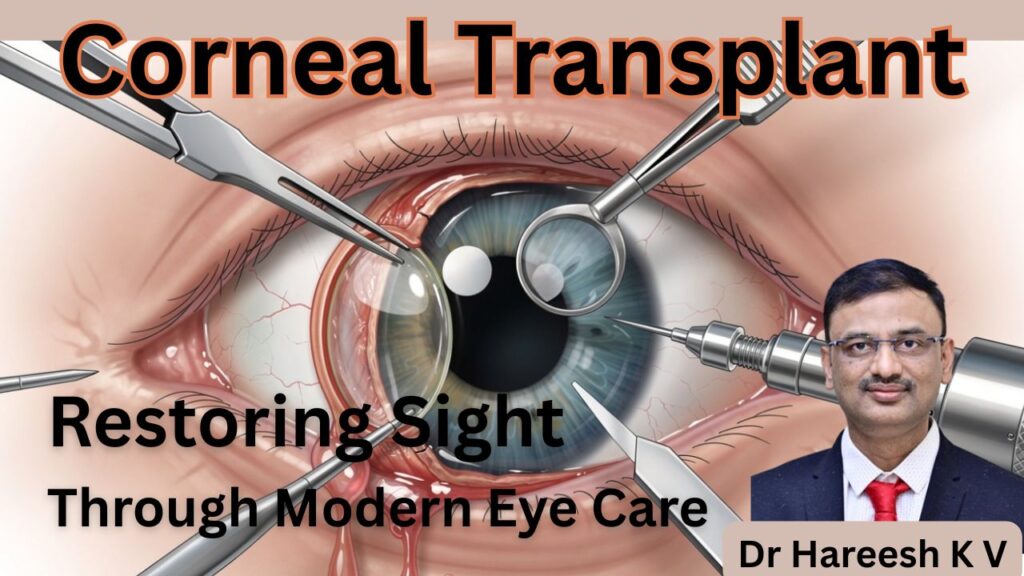
Corneal Transplant: Restoring Sight Through Modern Eye Care. The ability to see clearly is something many people take for granted until vision begins to fade. Among the various causes of vision loss, diseases and injuries affecting the cornea—the transparent front layer of the eye—can significantly impair sight. Fortunately, advances in modern ophthalmology have made corneal transplantation one of the most successful forms of organ transplantation, offering hope and restored vision to thousands of patients worldwide.
What Is the Cornea?
The cornea is the clear, dome-shaped surface covering the front of the eye. It plays a crucial role in focusing light onto the retina, enabling us to see clearly. When the cornea becomes damaged, scarred, swollen, or diseased, vision can become blurred, distorted, or even completely lost.
What Is a Corneal Transplant?
A corneal transplant, also known as keratoplasty, is a surgical procedure in which damaged or diseased corneal tissue is replaced with healthy donor corneal tissue obtained from an eye donor. The goal is to restore vision, reduce pain, and improve the appearance and function of the eye.
Unlike many other organ transplants, corneal transplantation has a high success rate because the cornea does not contain blood vessels, reducing the risk of rejection.
Conditions That May Require a Corneal Transplant
Several eye conditions can lead to corneal damage and may require transplantation, including:
• Keratoconus, where the cornea becomes thin and cone-shaped
• Corneal scarring from infections or injuries
• Corneal dystrophies such as Fuchs’ endothelial dystrophy
• Corneal ulcers that do not respond to treatment
• Complications from previous eye surgeries
• Chemical burns affecting the eye
• Corneal swelling and clouding
Types of Corneal Transplant Procedures
Modern eye care has evolved beyond traditional full-thickness corneal transplantation. Today, surgeons can replace only the affected layer of the cornea, resulting in faster recovery and better outcomes.
• Penetrating Keratoplasty (PK): This is a full-thickness corneal transplant where the entire damaged cornea is replaced with donor tissue.
• Deep Anterior Lamellar Keratoplasty (DALK): This procedure replaces the front layers of the cornea while preserving the patient’s healthy inner layer.
• Endothelial Keratoplasty (DSEK/DMEK): These advanced techniques replace only the innermost diseased layer of the cornea and are commonly used for conditions such as Fuchs’ dystrophy.
• The Surgical Procedure: Corneal transplant surgery is usually performed under local or general anesthesia. The damaged corneal tissue is carefully removed and replaced with donor tissue. Fine sutures may be used to secure the graft, although some modern techniques require minimal or no stitches.
Most patients can return home the same day, making it a relatively convenient procedure.
Recovery and Aftercare
Recovery depends on the type of transplant performed. While some patients notice improvement within weeks, others may require several months to achieve optimal vision.
Postoperative care typically includes:
• Regular eye examinations
• Prescription eye drops to prevent infection and rejection
• Avoiding eye rubbing
• Protecting the eye from injury
• Following the ophthalmologist’s instructions carefully
Patients should immediately report symptoms such as redness, pain, sensitivity to light, or sudden vision loss, as these may indicate graft rejection.
Success Rates and Outcomes
Corneal transplantation is considered one of the most successful transplant procedures in medicine. Advances in surgical techniques, donor tissue preservation, and postoperative care have significantly improved long-term outcomes.
Many patients experience substantial improvements in vision, allowing them to return to daily activities, work, and independent living. In some cases, glasses or contact lenses may still be needed to achieve the best visual results.
The Importance of Eye Donation
Corneal transplantation is only possible because of the generosity of eye donors and their families. A single donor can help restore sight to multiple individuals. Increasing awareness about eye donation remains essential to reducing waiting lists and ensuring that more patients receive timely treatment.
Looking Ahead
The future of corneal transplantation continues to evolve with innovations such as laser-assisted surgery, bioengineered corneas, stem cell therapies, and artificial corneal implants. These advances promise even better outcomes and expanded treatment options for patients with complex corneal diseases.
Also read articles of Dr Hareesh K V

Dr Hareesh K V
Medical director
Abhishek Nethradhama
Krupa Bindu, No.971/37, Mig 15Th A Cross, A Sector
Khb High Rise Apartment
Ambedkar Colony, Yelahanka New town
Bengaluru -64
Ph: 080-4093 3219/77957 15203
Eye Hospital in Yelahanka new town – Abhishek Nethradhama