
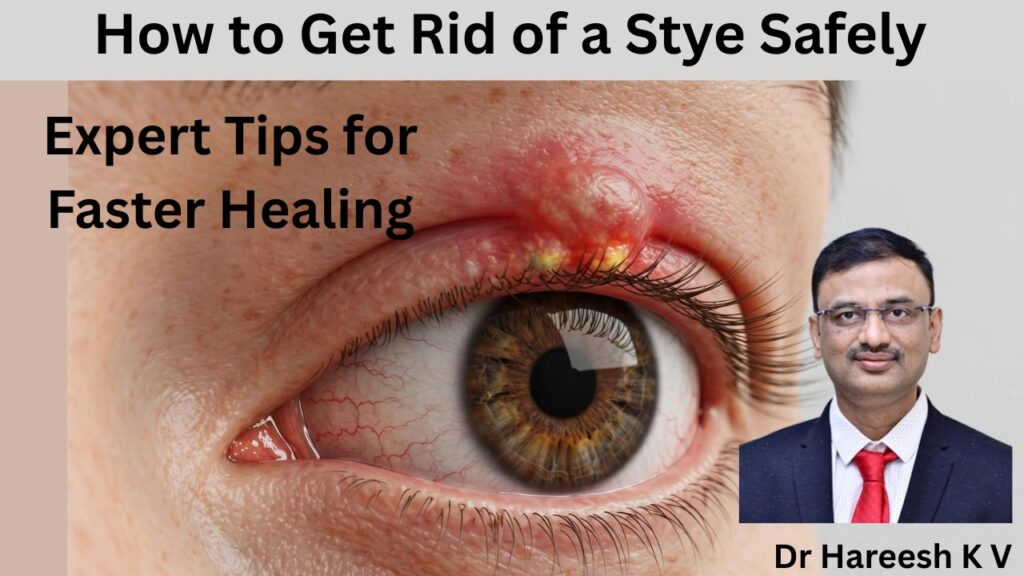
How to Get Rid of a Stye Safely: Expert Tips for Faster Healing . A painful, red bump on the edge of your eyelid can be alarming, but in most cases, it is a stye, medically known as a hordeolum. Styes are one of the most common eyelid problems and usually result from a bacterial infection of an oil gland or eyelash follicle. Although they are generally harmless and often heal on their own, proper care can speed recovery, reduce discomfort, and prevent complications.
What Is a Stye?
A stye is a small, tender lump that develops on the eyelid. It may appear on the outside of the eyelid near the eyelashes (external stye) or inside the eyelid (internal stye). Most styes are caused by Staphylococcus bacteria, which normally live on the skin but can infect blocked oil glands.
Common Symptoms
A stye usually develops quickly and may cause:
• A painful, swollen bump on the eyelid
• Redness and tenderness
• Watering of the eyes
• Sensitivity to light
• A gritty or scratchy feeling in the eye
• Swelling of the entire eyelid in some cases
• A small yellow or white spot where pus collects
Unlike conjunctivitis (pink eye), a stye usually affects only one localized area of the eyelid rather than the entire eye.
Safe Ways to Get Rid of a Stye
1. Apply Warm Compresses: The most effective home treatment is a warm compress.
• Soak a clean washcloth in warm (not hot) water.
• Place it gently over the closed eyelid for 10–15 minutes.
• Repeat 3–5 times a day.
The warmth helps soften the blocked gland, improves drainage, and promotes faster healing.
2. Keep the Eyelid Clean: Good eyelid hygiene helps remove debris and bacteria.
• Wash your hands before touching your eyes.
• Gently clean the eyelid with warm water or a mild eyelid cleanser.
Avoid rubbing or scratching the affected eye.
3. Avoid Squeezing or Popping the Stye: Never try to burst a stye yourself. Doing so can spread the infection to nearby tissues and worsen the inflammation.
4. Stop Wearing Eye Makeup: Avoid eye makeup until the stye has completely healed. Replace old mascara, eyeliner, and eye shadow afterward to reduce the risk of reinfection.
5. Avoid Contact Lenses: Wear glasses instead of contact lenses until the infection resolves. Contact lenses may become contaminated and delay healing.
When Are Medicines Needed?
Most styes improve within 7–10 days without antibiotics. However, your eye doctor may prescribe:
• Antibiotic eye ointment if there is associated eyelid infection.
• Oral antibiotics if the infection spreads beyond the eyelid.
• Pain-relieving medication if discomfort is significant.
Antibiotics are not necessary for every stye and should only be used under medical guidance.
When Should You See an Eye Doctor?
• The stye does not improve after one week.
• Swelling becomes severe or spreads to the entire eyelid or face.
• Vision becomes blurred or affected.
• You develop fever or increasing pain.
• The stye keeps recurring.
• The bump becomes large and persistent, suggesting a chalazion or another eyelid condition.
In some cases, an ophthalmologist may perform a minor procedure to drain the stye safely.
How to Prevent Future Styes
Simple daily habits can greatly reduce the risk of recurrence:
• Wash your hands frequently.
• Remove eye makeup before sleeping.
• Replace eye cosmetics every three to six months.
• Clean contact lenses properly and follow hygiene guidelines.
• Avoid sharing towels, eye makeup, or contact lens accessories.
• Manage conditions such as blepharitis, dandruff, diabetes, or rosacea, which can increase the likelihood of recurrent styes.
Common Myths
Myth: A stye is contagious.
Fact: The infection itself is not highly contagious, but bacteria can spread through contaminated hands or shared personal items.
Myth: You should pop a stye to heal faster.
Fact: Popping a stye can spread infection and increase the risk of complications.
Myth: Every eyelid lump is a stye.
Fact: A painless lump may be a chalazion, cyst, or another eyelid condition that requires different treatment.
A stye is usually a minor eye infection that responds well to simple home care. Warm compresses, proper eyelid hygiene, and avoiding makeup or contact lenses are the safest ways to promote healing. Most styes resolve within a week without complications. However, persistent, recurrent, or unusually painful eyelid lumps should always be evaluated by an ophthalmologist to rule out more serious conditions and ensure appropriate treatment. Early attention to eyelid hygiene not only speeds recovery but also helps keep your eyes healthy and comfortable in the long run.
Also read articles of Dr Hareesh K V

Dr Hareesh K V
Medical director
Abhishek Nethradhama
Krupa Bindu, No.971/37, Mig 15Th A Cross, A Sector
Khb High Rise Apartment
Ambedkar Colony, Yelahanka New town
Bengaluru -64
Ph: 080-4093 3219/77957 15203
Eye Hospital in Yelahanka new town – Abhishek Nethradhama