
Is It Eye Flu or an Eye Infection? How to Tell the Difference? Red, watery, or irritated eyes are a common complaint, especially during the rainy season. While many people assume these symptoms are simply “eye flu,” not every red eye is the same. Eye flu and other eye infections can have similar symptoms but differ in their causes, treatment, and severity.
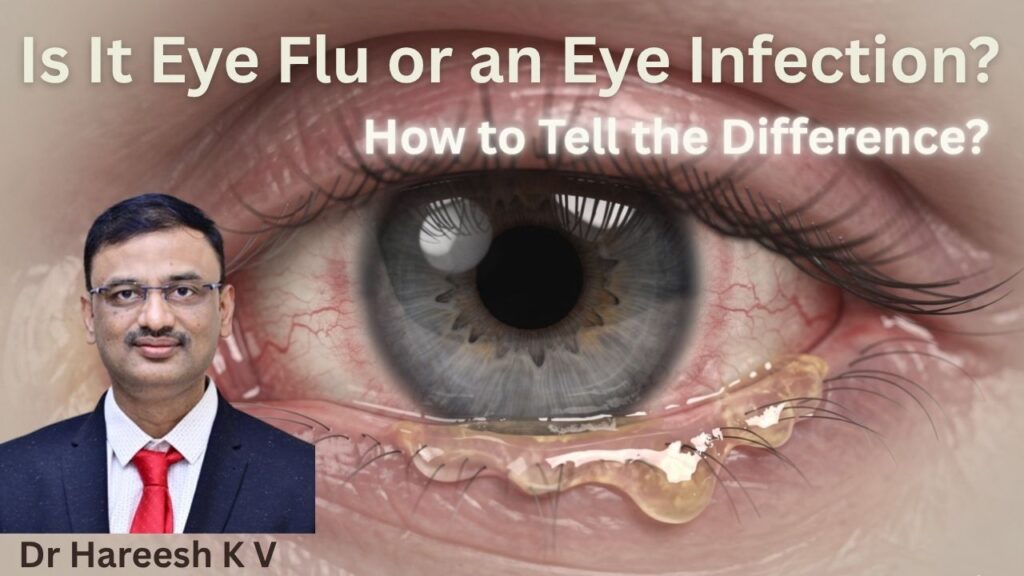
Eye flu, also known as viral conjunctivitis, is an infection of the conjunctiva—the thin, transparent membrane covering the white part of the eye and the inner eyelids. It is most commonly caused by viruses, including adenoviruses, and spreads easily through direct contact, contaminated surfaces, or shared personal items such as towels and handkerchiefs.
Common symptoms include:
• Redness in one or both eyes
• Excessive tearing or watery discharge
• Itching or a gritty sensation
• Mild swelling of the eyelids
• Sensitivity to light
Eye flu is highly contagious but usually clears up on its own within one to two weeks.
What Is an Eye Infection?
The term “eye infection” is broader and includes infections caused by bacteria, viruses, fungi, or parasites. One of the most common types is bacterial conjunctivitis, which differs from viral eye flu in several ways.
Signs of a bacterial eye infection may include:
• Thick yellow or green discharge
• Eyelids stuck together, especially after sleep
• Redness and swelling
• Eye pain or discomfort
• Blurred vision in some cases
Unlike viral eye flu, bacterial infections often require antibiotic eye drops or ointments prescribed by a doctor.
How to Tell the Difference?
Although both conditions cause red eyes, a few key signs can help distinguish them:
• Eye flu (viral): Watery discharge, highly contagious, often begins in one eye before affecting the other, and may be accompanied by a cold or sore throat.
• Bacterial infection: Thick, sticky discharge, eyelids crusted shut in the morning, and symptoms may improve quickly with antibiotics.
• Allergic conjunctivitis: Usually affects both eyes, causes intense itching, and is often associated with sneezing or other allergy symptoms.
If you experience severe eye pain, significant vision changes, sensitivity to light, or symptoms that worsen despite home care, seek medical attention immediately.
Prevention and Care
Wash your hands frequently, avoid touching or rubbing your eyes, and never share towels, cosmetics, or eye drops. If you have eye flu, stay home when possible until the risk of spreading the infection decreases. Use a clean, cool compress to relieve discomfort, but avoid wearing contact lenses until your eyes have fully healed.
While eye flu is usually a mild viral illness that resolves on its own, other eye infections—particularly bacterial ones—may require medical treatment. Paying attention to the type of discharge, associated symptoms, and how your condition progresses can help you identify the problem. When in doubt, consult an eye specialist for an accurate diagnosis and timely treatment to protect your vision.
Also read articles of Dr Hareesh K V

Dr Hareesh K V
Medical director
Abhishek Nethradhama
Krupa Bindu, No.971/37, Mig 15Th A Cross, A Sector
Khb High Rise Apartment
Ambedkar Colony, Yelahanka New town
Bengaluru -64
Ph: 080-4093 3219/77957 15203
Eye Hospital in Yelahanka new town – Abhishek Nethradhama