

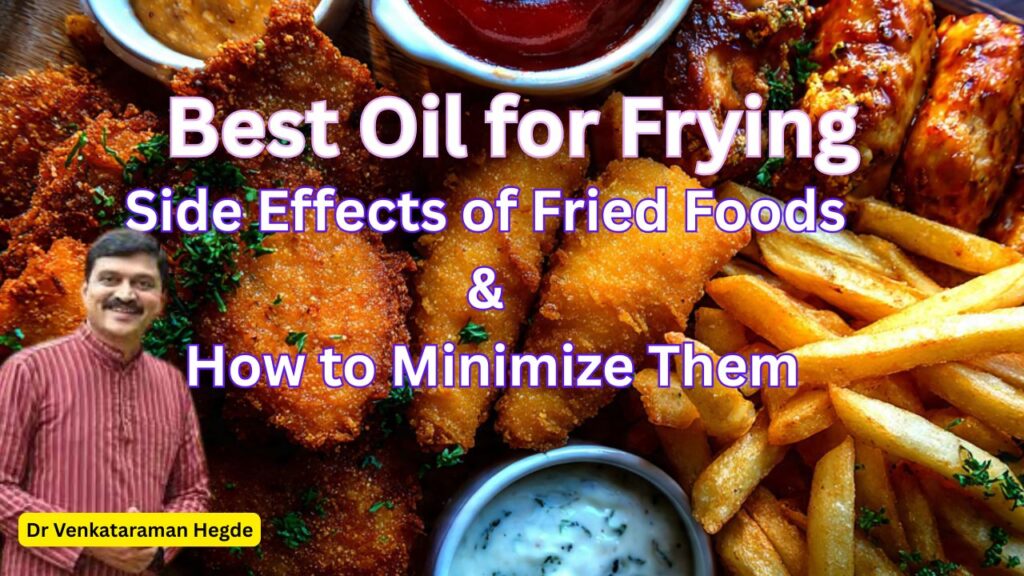
Best Oil for Frying? Side Effects of Fried Foods & How to Minimize Them? In many homes, there seems to be an unwritten rule—a meal feels incomplete without at least one fried item. Pakoras, pooris, bajjis, cutlets—fried foods are deeply tied to taste and comfort.
But with growing concerns about lifestyle diseases, it becomes essential to ask:
• What is the best oil for frying?
• What are the side effects of eating fried foods?
• How can we reduce these side effects and enjoy fried foods safely?
Let’s explore each of these questions in detail.
Why Fried Foods Can Be Harmful When Consumed Excessively
Frying exposes food to very high temperatures. When unhealthy oils are used—or when the same oil is reused multiple times—it leads to chemical changes that burden the body. Excessive or routine consumption of such foods can cause:
Heart Disease: Fried foods often contain trans fats or deteriorated fats that increase bad cholesterol (LDL). High LDL can deposit inside blood vessels, causing blockages that eventually lead to – Heart disease; Stroke; Poor blood circulation.
Brain & Nervous System Issues: Oxidised oils lead to inflammation and oxidative stress, which may affect brain cells and long-term nerve health.
Weight Gain & Belly Fat: Fried foods are calorie-dense. Regular intake contributes to – Increased belly fat; Higher body weight; Hormonal imbalance related to obesity.
Diabetes & High Blood Pressure: The combination of – Refined oils, High calories and Increased body fat creates a higher risk of developing insulin resistance, type-2 diabetes, and hypertension.
Chronic Inflammation: Repeated intake of low-quality fried foods can keep the body in a state of constant inflammation, which raises the risk of – Digestive issues; Joint problems; and Even cancers in the long term.
The Problem With Street or Packaged Fried Foods: Foods fried in cheap, chemical-loaded, reused oils (commonly used in roadside and packaged snacks) pose additional dangers – More trans fats; More carcinogenic (cancer-causing) compounds; Higher oxidative stress; and Digestive irritation.
But Is Eating Fried Food Always Harmful?
Surprisingly, health science and Ayurveda both say NO. Fried foods are not harmful by default. The key lies in:
• What we fry in (the oil)
• How often we fry
• How much we eat
• How we support digestion after eating
So the real question becomes—which oils are actually safe for frying?
Which Oil Is the Best for Frying?
To be suitable for frying, an oil must have a high smoke point—meaning it shouldn’t break down or form harmful compounds at high temperatures. Many assume refined oils are safest because they tolerate high heat. But research shows refined oils undergo heavy chemical processing, making them unsuitable for daily consumption.
The best natural oils for frying are:
1. Pure Ghee – The Gold Standard for Frying
Smoke point: ~250°C (One of the highest among natural fats). Ghee remains stable even at very high temperatures, meaning it does not burn easily and does not produce harmful compounds.
Health benefits of ghee:
• Rich in vitamins A, D, E, K
• Contains short-chain fatty acids that support gut health
• Reduces inflammation
• Good for brain and immunity
• Provides clean, stable energy
Important: The ghee used must be pure (desi cow ghee preferred). Impure or adulterated ghee may not offer these benefits.
2. Virgin Coconut Oil – Smoke point: ~200°C
Coconut oil also tolerates high heat without breaking down. It contains medium-chain fatty acids, which are processed quickly by the body and used for energy.
Benefits:
• Rich in lauric acid, an antimicrobial compound
• Supports digestion and immunity
• Helps reduce inflammation
• Provides steady energy
Myth: “Ghee and Coconut Oil Harm the Heart”. This is largely a misconception. When consumed in moderation, both ghee and coconut oil are safe and even beneficial for heart health.
How to Consume Fried Foods with Minimal Side Effects
Ayurveda offers practical ways to enjoy fried foods without disturbing digestion.
• Eat Fried Foods Only Occasionally: Healthy individuals can eat fried foods, but not daily.
• Prefer Eating Them at Lunchtime: The digestive fire (Agni) is strongest around midday, making lunch the ideal time for heavier foods. Avoid fried foods at night. Digestion slows down after sunset, increasing: Gas; Indigestion; Sluggishness; and Weight gain
• Eat Fried Foods When Hunger Is Strong: Consuming them on a full or sluggish stomach overloads digestion.
• Drink a Hot Digestive Decoction (Kashaya) Afterwards: This is one of the most effective Ayurvedic hacks. Prepare a light decoction using – Coriander seeds, Cumin, Ginger, and Om kalu / ajwain (carom seeds). Drinking this warm decoction or simply hot water after fried food helps prevent – Indigestion; Gas; Phlegm build-up; Headache; and Lethargy.
• Avoid Reusing Oil: Reused oil forms toxic compounds that damage the heart and liver.
• Avoid Packaged or Street-Fried Foods: These are often fried in – Cheap, low-grade oils; Reused oils; Hydrogenated fats; and Oils mixed with chemicals
Eating fried food is not a sin—but the oil, quantity, and timing matter more than anything else.
Safest oils for frying:
• Pure Ghee (best)
• Virgin Coconut Oil
To reduce side effects:
• Avoid daily consumption
• Prefer lunch time
• Drink a hot digestive decoction
• Never reuse oil
• Avoid street or packaged fried snacks
When consumed wisely, fried foods can be part of a balanced lifestyle without harming your heart, digestion, or long-term health.
Also Read : Dr Venkatramana Hegde articles

Dr Venkataramana Hegde
Veda Wellness Center
Nisarga Mane, Sirsi
Uttarakannada District
Ph:9448729434