PARKINSON DISEASE AND THE AGEING INDIAN POPULATION
Parkinson’s Disease (PD) is a type of nervous system disorder which affects movement along with the ability to perform daily common activities. PD tends to slowly damage the central nervous system, comprising of the brain and the spine thus affecting the motor system of the patient’s body.
- The incidence and prevalence of PD increases with advancing age (mostly 65 and above). Most commonly, this condition exhibits itself after the age of 50 yrs, but in some rare cases, it can affect people of younger age group as well.
- 1% of people over the age of 65 years suffers from PD (estimated about 12 lac Indians living with PD in India)
- PD is twice as common in men than in women in most populations (1 women for every 3 men impacted)
- Certain gene variations appear to increase the risk of Parkinson’s disease but with a relatively small risk of Parkinson’s disease for each of these genetic markers.
Risk factors
Exact causes of PD are unknown, but some cases are often triggered by natural and other factors that tend to play a critical role in the development of the condition. Repeated head injuries, improper diet including significant amount of exposure to pesticides or solvents, sedentary lifestyles are some of the risk factors.
Manifestation/Early Signs
As mentioned above, there are a wide range of symptoms related to PD but motor symptoms are more prominent and common in patients with PD. Amongst many, the most common symptoms include;
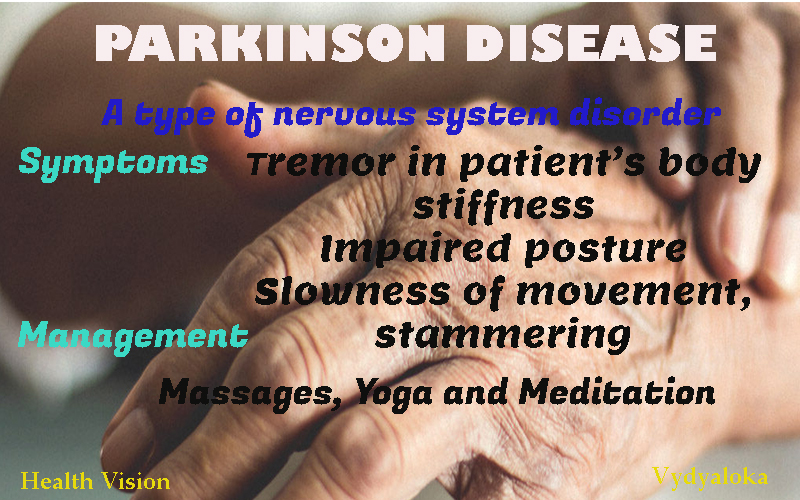
Tremor or a form of shaking in the patient’s body, Rigid muscles or stiffness, Impaired posture or balance, Slowness of movement, Trouble with coordination with any kind of movement, Changes in speech and writing (becoming slower while speaking or writing or even stammering).
Other than motor symptoms, a person with PD might also experience non- motor symptoms which include Anxiety, Depression, Sleep problems such as insomnia, Constipation, Weight loss & Fatigue.

Other common symptoms include mood changes, including depression, difficulty chewing and swallowing, problems with urination, constipation, skin problems & sleep problems.
Diagnosis
There are no set of specific tests that exist to diagnose PD. A neurologist generally reviews symptoms and relevant medical history of the patient to either rule out the possibility of PD or suggest therapies/measures to cope with it.
Management
PD manifests itself in five different stages, starting from the mildest and leading up to the most severe.
- Some medical treatments that might be advised by neurologists to their patients include medications to increase or substitute levels of dopamine in their body and help patients manage basic movement and improper posture.
- Changes in lifestyle can enable living with PD easier which includes regular physical activity which would keep them, and their motor skills engaged, adopting a healthy lifestyle
- Paying attention towards their mental health that includes eating healthy and nutritious food, to have a good sleep cycle and any kind of physical activity.
- Massages, Yoga and Meditation also helps patients to feel relaxed.
- A Deep Brain Stimulation Surgery is advised by neurologists in some advanced cases of PD. In this surgery, surgeons implant a device into a specific part of the patient’s brain. That device is connected to a generator implant in the patient’s chest which sends electrical pulses to the brain and tends to reduce symptoms of PD in some cases.
Pay attention to Caregivers
It can be devastating for someone to live with a disease like PD which is progressive and erratic, where some people also experience anxiety and depression. At times like these, someone to hear them out or to have a shoulder to cry, can act as heartwarming gesture. Help encourage your loved ones to share their feelings, what they’re experiencing and ensuring that you are listening.
Parkinson’s disease can be managed well if identified at an early stage.


Dr Reema N
Group Medical Director & COO
KITES Senior Care, Bangalore


