How to lower the risk of Gestational diabetes? Risk of Gestational diabetes can be managed by healthy diet and eating pattern, regular physical activity and also by monitoring blood sugar levels.

Gestational diabetes in mother increases the risk of pre-diabetes and obesity in kids. In case you suffer from gestational diabetes during the course of your pregnancy, do not panic. The condition is quite common and can be managed easily, without causing any harm to the baby
What is Gestational diabetes mellitus (GDM)?
Gestational diabetes mellitus (GDM) is the development of high blood sugar that develops during pregnancy and usually disappears after birth of the child. Although gestational diabetes may occur at any time during the pregnancy, it is more common in the second half of pregnancy.
Gestational diabetes increases the chances of post-partum depression, stillbirth, caesarean section, pre-eclampsia as well as the child’s health and development post birth. The woman herself also has a greater chance of developing GDM in subsequent pregnancies and overt diabetes later in life. There is emerging evidence for the use of moderate exercise, probiotics and vitamin D in the prevention of GDM.
How gestational diabetes affects child?
Studies have established that 10 to 14 year old children born by women who suffered from untreated gestational diabetes are at higher risks of developing pre-diabetes as well as obesity, compared to children whose mothers did not suffer from the high blood sugar.
“Our study shows that independent of a mother’s weight or genetic predisposition to diabetes, a mother’s blood sugar level during pregnancy independently adds to the risk of both obesity and glucose intolerance in her child,” says lead researcher Boyd Metzger, professor emeritus of medicine at Northwestern university Feinberg school of Medicine.
Another study conducted at The Northwestern university Feinberg school of Medicine also concluded that irrespective of the mother’s genetic disposition to diabetes or weight, the blood sugar level of the mother during pregnancy can independently have an impact on the obesity and glucose tolerance that the baby develops after birth.
The mother’s blood sugar levels and the efficiency of metabolism affect the child’s metabolism and glucose tolerance. In order to lower the risk of developing gestational diabetes and to lower the ill effects on the child, effective management of gestational diabetes is necessary. Gestational diabetes can be managed effectively by adopting a healthy diet and eating pattern, continuous monitoring of blood sugar levels and by undertaking regular physical activity.
Insulin injections may also be required by some women in order to keep the condition of gestational diabetes in control for the rest of their pregnancy. Once the baby is born, however, the need for insulin injections ceases. Gestational diabetes usually disappears after the birth of the baby.
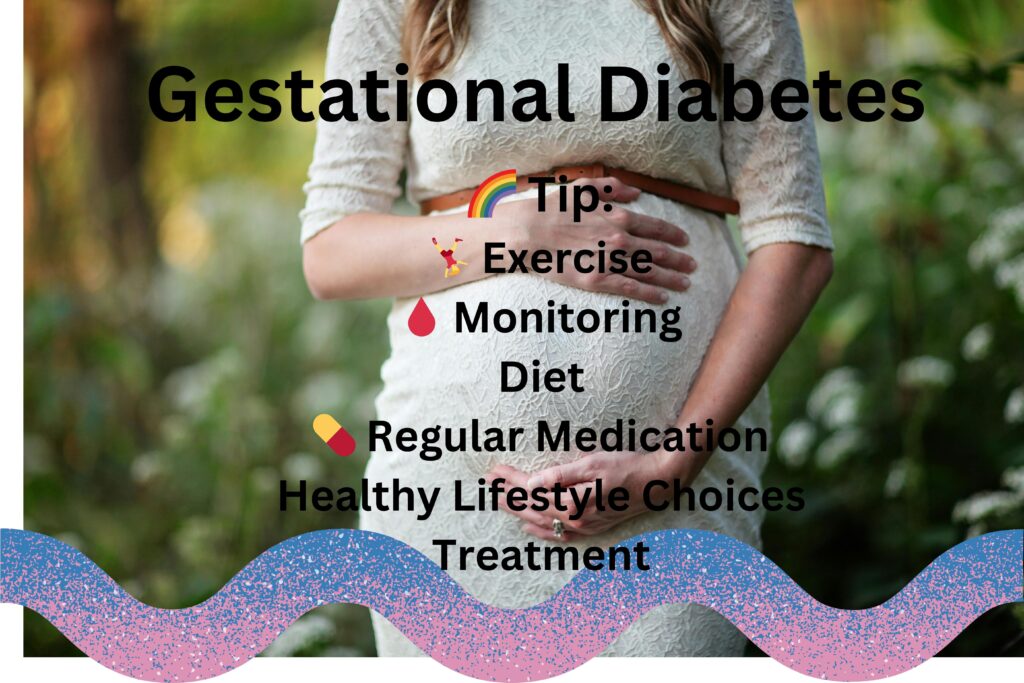
The following are some tips to manage gestational diabetes:
- Exercise more: Medical professionals advise and recommend exercises that might be good for both pregnant and baby. Try to fit in about 15 minutes of physical activity in daily routine and increase this duration to about 30 minutes gradually over a period of time.
- Test and monitor blood sugar levels: Test your blood sugar levels regularly, in order to ensure that the added exercises and the dietary changes have actual effect on blood sugar levels.
- Work on diet: To control blood sugar levels, gynaecologist may suggest to consult a registered dietitian so as to help diet plan and make sure to stick to it. Diet plan has to ensure that gestational diabetes is under control, while baby receives enough nutrients and calories that it required for proper growth and development. The diet should contain high fiber and low glycemic index foods.
- Take regular medication: In case blood sugar levels remain high despite making the above mentioned changes in lifestyle, medical professional may prescribe some medications to keep blood sugar in check and ensure the protection of baby. In case these medications do not work as well, insulin injections may be recommended as the next logical step for the management of gestational diabetes.


Dr. Radha S. Rao
Bengaluru


