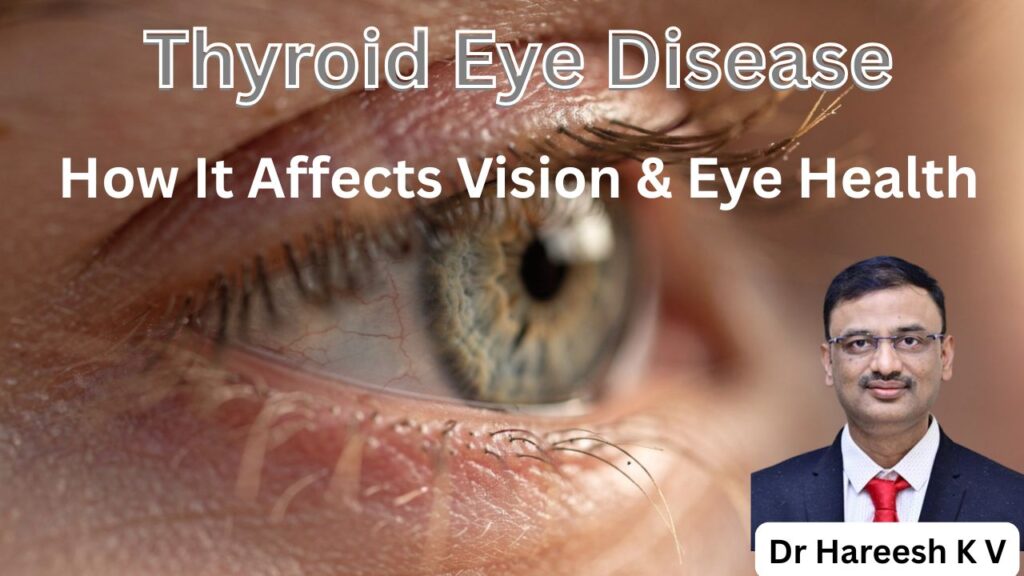
Thyroid Eye Disease – How It Affects Vision & Eye Health. Thyroid Eye Disease is an autoimmune condition that can cause bulging eyes, discomfort, double vision, and even vision loss, making early diagnosis and treatment essential for protecting your eye health.

Thyroid Eye Disease (TED), also known as thyroid-associated ophthalmopathy or Graves’ eye disease, is an autoimmune condition that affects the tissues and muscles around the eyes. Although it is most commonly linked to an overactive thyroid (hyperthyroidism) caused by Graves’ disease, it can also occur in people with normal thyroid function or even an underactive thyroid.
TED is more than a cosmetic concern. While many people first notice bulging eyes or changes in their appearance, the condition can also lead to discomfort, double vision, and, in severe cases, permanent vision loss if left untreated. Understanding the symptoms and seeking early treatment can help preserve both eye health and quality of life.
What Causes Thyroid Eye Disease?
Thyroid Eye Disease occurs when the immune system mistakenly attacks the muscles and fatty tissues behind the eyes. This inflammation causes swelling, pushing the eyeballs forward and affecting the normal movement and function of the eyes.
The condition is strongly associated with Graves’ disease, but not everyone with Graves’ disease develops TED. Several factors increase the risk, including:
Autoimmune thyroid disorders
• Smoking, which significantly increases both the risk and severity of the disease
• Poorly controlled thyroid hormone levels
• Family history of autoimmune diseases
• Female gender, although severe cases are more common in men
Common Symptoms
The symptoms of Thyroid Eye Disease can develop gradually and vary from mild to severe. They may affect one or both eyes. Common signs include:
• Bulging or protruding eyes
• Dry, gritty, or irritated eyes
• Excessive tearing or watery eyes
• Redness and swelling around the eyes
• Eyelid retraction, making the eyes appear wide open
• Sensitivity to light
• Eye pain or pressure, especially when looking up or down
• Double vision
• Difficulty closing the eyes completely
• Blurred vision
If the disease progresses, swelling around the optic nerve may reduce vision, making immediate medical attention essential.
How Does TED Affect Vision?
The inflammation and swelling associated with Thyroid Eye Disease can interfere with normal eye function in several ways.
• Double Vision: Inflamed eye muscles become stiff and cannot move properly, causing the eyes to become misaligned. This leads to double vision, making everyday tasks like reading and driving difficult.
• Dry Eye Disease: Because the eyelids may not close completely, the surface of the eye remains exposed. This causes excessive dryness, irritation, burning, and increases the risk of corneal damage.
• Corneal Problems: Continuous exposure can result in scratches, ulcers, or infections of the cornea, potentially affecting vision if left untreated.
• Optic Nerve Compression: In severe cases, swollen tissues behind the eye compress the optic nerve. This is a medical emergency because it can lead to permanent vision loss if not treated promptly.
How Is Thyroid Eye Disease Diagnosed?
An ophthalmologist performs a comprehensive eye examination to evaluate vision and eye movement. The evaluation may include:
• Visual acuity testing
• Eye movement assessment
• Measurement of eye protrusion (proptosis)
• Examination of the optic nerve and retina
• Thyroid function blood tests
• CT scan or MRI to assess swelling of the eye muscles and surrounding tissues
Early diagnosis allows treatment before permanent damage occurs.
Treatment Options
Treatment depends on the stage and severity of the disease.
Mild Disease: Patients with mild symptoms may benefit from:
Artificial tears to relieve dryness
• Lubricating eye ointments at night
• Wearing sunglasses outdoors
• Sleeping with the head elevated to reduce swelling
• Quitting smoking
• Maintaining stable thyroid hormone levels
Moderate to Severe Disease
When inflammation is significant, treatment may include:
• Corticosteroids to reduce inflammation
• Immunotherapy or biologic medications that target the autoimmune response
• Radiation therapy in selected cases
• Prism glasses to improve double vision
Surgical Treatment
Once the disease becomes inactive, surgery may be recommended to improve function and appearance. Surgical options include:
• Orbital decompression surgery to relieve pressure behind the eye
• Eye muscle surgery to correct double vision
• Eyelid surgery to improve eyelid position and protect the eye surface
Can Thyroid Eye Disease Be Prevented?
While TED cannot always be prevented, several steps can reduce the risk of severe disease:
• Stop smoking
• Keep thyroid hormone levels under good control
• Attend regular follow-up appointments with your endocrinologist and ophthalmologist
• Report any new eye symptoms promptly
• Protect your eyes from wind, dust, and excessive sunlight
When Should You See a Doctor?
Seek medical attention immediately if you experience:
• Sudden decrease in vision
• Persistent double vision
• Severe eye pain
• Inability to close your eyes completely
• Changes in color vision
• Rapid worsening of eye bulging or swelling
Prompt evaluation can prevent irreversible vision loss.
The Bottom Line
Thyroid Eye Disease is a potentially serious autoimmune condition that affects both the appearance and function of the eyes. While symptoms such as bulging eyes, dryness, and redness are common, the disease can also interfere with vision and, in rare cases, threaten eyesight. Early diagnosis, proper thyroid management, smoking cessation, and timely treatment play a crucial role in protecting vision. If you have a thyroid disorder and notice changes in your eyes, don’t ignore them—consult an eye specialist as early intervention offers the best chance for preserving your eye health and vision.
Also read articles of Dr Hareesh K V


Dr Hareesh K V
Medical director
Abhishek Nethradhama
Krupa Bindu, No.971/37, Mig 15Th A Cross, A Sector
Khb High Rise Apartment
Ambedkar Colony, Yelahanka New town
Bengaluru -64
Ph: 080-4093 3219/77957 15203
Eye Hospital in Yelahanka new town – Abhishek Nethradhama