When Relief Turns Risky – Steroid Overuse and the Silent Rise of Secondary Glaucoma. Steroids remain essential and life-saving medications when used appropriately. The danger lies in their misuse and unsupervised use. Increasing awareness, responsible prescribing, and timely screening can prevent thousands from losing vision unnecessarily.
A Common Medicine, An Overlooked Danger
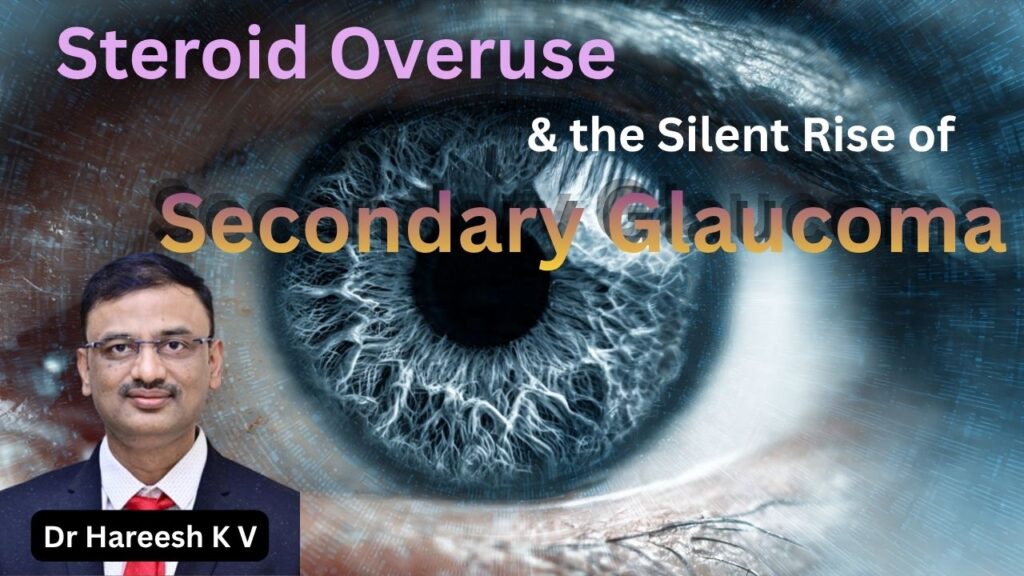
Steroids are widely used to treat allergies, skin disorders, breathing problems, and eye irritation. Often seen as quick and effective solutions, they are easily available and frequently used without medical supervision. However, ophthalmologists across India are increasingly warning that prolonged or unsupervised steroid use is emerging as a major trigger for secondary glaucoma, a sight-threatening condition that can cause irreversible blindness.
Steroids—whether taken as tablets, inhalers, skin creams, or eye drops—can raise intraocular pressure when used for extended periods. What makes this especially dangerous is that the rise in eye pressure usually occurs without early symptoms. Patients often feel normal while the optic nerve sustains permanent damage.

India’s Growing Glaucoma Burden
India already bears a significant share of the global glaucoma burden. An estimated 12–13 million people in the country are living with glaucoma, accounting for nearly one-sixth of cases worldwide. Globally, glaucoma affects around 75–80 million people, with projections suggesting the number will exceed 110 million by 2040.
Despite being the leading cause of irreversible blindness, glaucoma remains widely underdiagnosed in India. Experts estimate that 85–90% of cases go undetected, largely because the disease progresses silently. By the time patients notice vision loss, irreversible optic nerve damage has often already occurred.
Steroid-Induced Glaucoma: A Preventable Threat
In recent years, doctors have reported a steady rise in newly diagnosed glaucoma cases. This increase is driven by longer life expectancy, higher rates of diabetes and myopia, improved diagnostic tools, and greater public awareness. However, a growing proportion of these cases are now linked to secondary glaucoma caused by steroid misuse—an avoidable risk factor.
Steroid-induced glaucoma is increasingly seen in routine clinical practice, particularly among patients who have used steroid eye drops or medications for long periods without supervision. Because the condition develops silently, patients are often unaware that treatment for one problem is steadily damaging their vision.
Who Is Most at Risk?
Glaucoma is most commonly diagnosed in individuals over 40 years of age, with incidence peaking between 50 and 70 years. However, ophthalmologists are now detecting juvenile and early-onset glaucoma, especially among people with a family history of the disease or secondary triggers such as steroid exposure.
While primary open-angle glaucoma remains the most common form, steroid-induced glaucoma and pseudoexfoliation glaucoma are being reported with increasing frequency. Individuals with diabetes, hypertension, thyroid disorders, high myopia, long-term steroid use, or a history of eye injury—even from childhood—face a higher risk and require closer monitoring.
Symptoms That Are Easy to Miss
Early glaucoma symptoms are often subtle and ignored. Frequent changes in spectacles, eye strain, headaches, difficulty seeing in low light, or halos around lights may appear minor. Because central vision is usually preserved in the early stages, patients assume their eyes are healthy, leading to dangerous delays in diagnosis.
Adding to the problem are common myths—that good vision equals healthy eyes, that glaucoma affects only older adults, or that normal eye pressure rules out the disease. In reality, glaucoma can develop at any age, and eye pressure alone does not tell the full story.
Why Routine Eye Screening Matters
Regular eye examinations are the strongest defence against glaucoma-related blindness. Adults over 40 should undergo comprehensive screening every one to two years, while high-risk individuals need annual evaluations. Vision testing alone is insufficient; screening must include measurement of eye pressure and detailed assessment of the optic nerve.
Also read articles of Dr Hareesh K V


Dr Hareesh K V
Medical director
Abhishek Nethradhama
Krupa Bindu, No.971/37, Mig 15Th A Cross, A Sector
Khb High Rise Apartment
Ambedkar Colony, Yelahanka New town
Bengaluru -64
Ph: 080-4093 3219/77957 15203
Eye Hospital in Yelahanka new town – Abhishek Nethradhama