Millets in Bakery and Snacks: A New Wave of Healthy Eating. The combination of nutritional benefits, gluten-free possibilities and sustainability appeal is helping millets break out of being a traditional staple to a trendy health food ingredient.
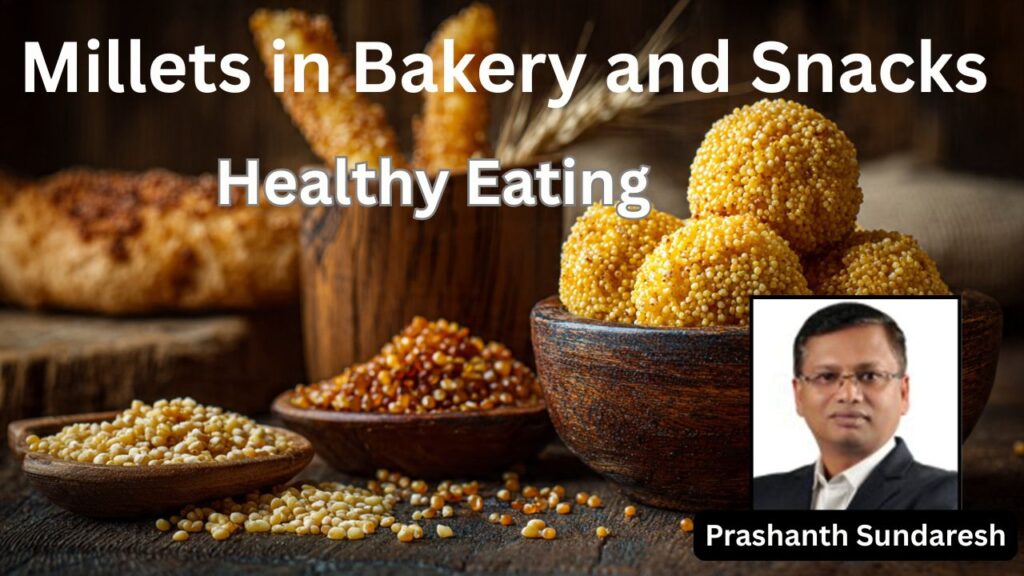

In recent years, there has been a significant shift in consumer preference towards healthier foods — including snacks and bakery items. Among the rising stars in this domain are millets — a group of small-seeded cereal grains (such as Finger Millet/ragi, Pearl Millet/bajra, Sorghum/jowar, etc) — which are being increasingly used in bakery goods and snack innovations.
Why Millets? Nutritional Advantages
Here are some key reasons why millets are an attractive “health grain”:
• Millets have high dietary fiber, which supports digestion, gut health and satiety.
• They have a low glycaemic index (GI) compared to refined wheat/rice, meaning slower release of glucose into the bloodstream — useful in blood-sugar management.
• They are rich in minerals (iron, calcium, magnesium) and B-vitamins.
• Many are naturally gluten-free, making them suitable for gluten intolerance or celiac-friendly innovations.
• They also contain phytochemicals/antioxidants (like phenolic compounds, flavonoids) that may support general health and reduce oxidative stress.
Millets Meet Bakery & Snacks: What’s Changing?
The traditional use of millets has been in porridge, rotis, flatbreads or regional dishes. What we’re now seeing is expansion into snacks and bakery goods — cookies, cakes, bars, extruded crisps, muffins, puffs etc.
Example innovations
We get organic, millet-based cookies, cakes, laddoos, noodles and vermicelli using jowar, bajra and ragi.
A millet puffs are prepared -100% vegan, gluten‐free, high fibre, low GI.
Reviews emphasise that millet snacks are suitable for gluten-free, diabetes-friendly or “guilt-free” snacking.
Why bakery & snack makers are adopting millets
• Consumers increasingly seek healthier indulgences: snacks that taste good but have better nutritional profiles.
• Millets enable differentiation in a crowded bakery category: “millet cookies”, “multi-millet bars”, etc sound modern and premium.
• From a formulation perspective: millets can partially replace refined wheat flour (maida) or processed grains, adding fibre and minerals. For example, small-millet breads/cakes were developed replacing 10-50% of wheat flour with millet.
Health & Consumer Benefits in the Snack/Bakery Context
When millets are used in snacks and bakery goods, consumers can gain several advantages:
• Better Blood Sugar Control: Because millets are lower GI and higher fibre, snacks made with them may lead to slower glucose release compared to high-maida snacks.
• Increased Satiety: Fibre and complex carbs help in feeling fuller, which is useful in snack choices for weight management.
• Gluten-Free or Lower Gluten Options: For those avoiding wheat, millet snacks are appealing.
• Higher Nutrient Density: Snacks containing millets may offer minerals and vitamins beyond the standard refined-flour snack.
• Better Digestibility: Some millets are easier to digest than refined grains and may support gut-health.
From the bakery/snack maker’s perspective, they can promote “ancient grains”, “whole-grain”, “gluten-free”, “high-fibre” etc — which resonate with modern consumers.
Strategies for Bakeries & Snack Brands
• Partial Substitution Approach: Begin by substituting 20-30 % of wheat flour with millet flour in cookies/cakes/breads and gradually increase as consumer acceptance grows. Studies used 10-50% replacement levels.
• Highlight Health Credentials: Use labelling and marketing to emphasise “gluten-free”, “high-fibre”, “low GI”, “ancient grain”, “nutri-cereal” etc — all of which millets support. E.g., university scientists flagged that millets have low GI, help digestion, etc.
• Innovative:
Cookies, biscuits, muffins, cakes, bars, extruded crisps, and puffs.
Use millet flours combined with flavourful inclusions (nuts, seeds, dried fruits) to improve taste and appeal.
Explore savoury snack formats using millet base (e.g., chips, crackers) for variety.
• Taste & Texture Focus: Formulations must deliver good mouth-feel, appearance and taste. Conduct consumer testing to find preferred blends and formulations. Use blends of different millets to leverage different functional properties.
A Focus on India: Why It Matters Here
• India has a long history of millet cultivation and consumption in many regions — revival of millets aligns with national food security objectives and the International Year of Millets.
• There is growing urban interest in “better for you” snacks and bakery goods. The domestic value-added millet foods market is still developing (cookies, chips, extruded snacks) but has potential.
• In Indian households, cultural acceptance of millets is increasing, and moving them into familiar formats (cookies, breads, snack bars) may accelerate adoption over more traditional forms.
• For women’s health, millets may offer benefits: higher calcium (especially finger millet/ragi) which supports bone health, plus fibre and low GI which may help weight-management, blood sugar control, and heart health.
Also read: Articles from Prashanth Sundaresh

Prashanth Sundaresh
Co founder and operations head, Woodified Natura
65/2, 6th Cross, Kaveri Pura, Bengaluru – 560079
E-mail: prashanth@woodifiednatura.in
Ph: 91485 43303/ 9845764343
https://woodifiednatura.in


