Double Vision, Glare, and Halos: Could Keratoconus Be Causing Your Eye Problems? Have you noticed that your vision remains blurry even after getting a new pair of glasses? Do you experience double vision in one eye, struggle with glare while driving at night, or see halos around lights? These symptoms may be more than just ordinary vision problems. They could be signs of keratoconus, a progressive eye condition that affects the shape of the cornea and can significantly impact vision if left untreated.
What Is Keratoconus?

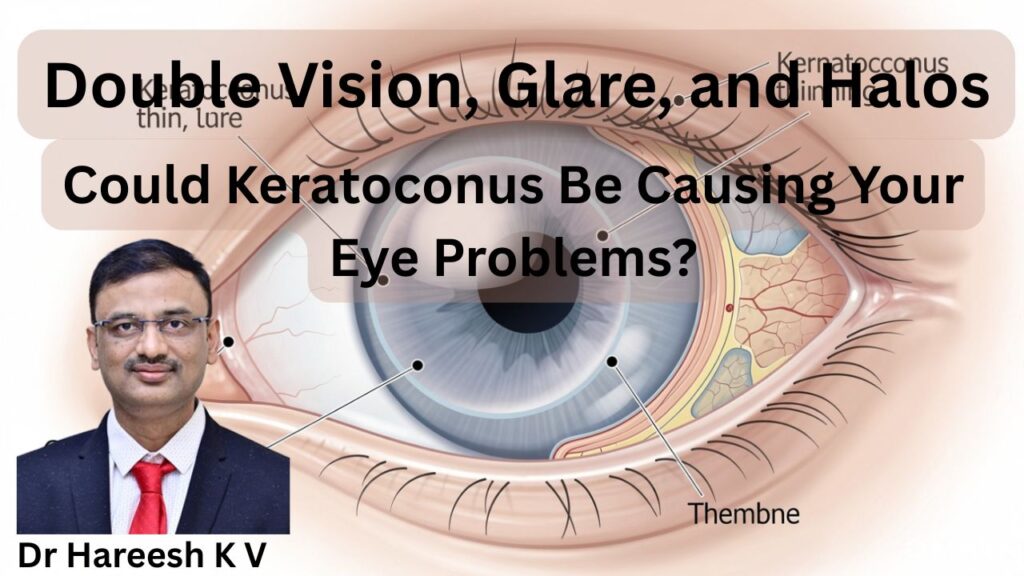
The cornea is the clear, dome-shaped front surface of the eye that helps focus light onto the retina. In people with keratoconus, the cornea gradually becomes thinner and bulges outward into a cone-like shape instead of maintaining its normal round curve.
This irregular shape prevents light from focusing properly, leading to distorted and blurred vision. Keratoconus usually begins during the teenage years or early twenties and may continue to progress for several years before stabilizing.
Common Symptoms You Shouldn’t Ignore
Keratoconus often develops slowly, making it easy to mistake the symptoms for a simple change in eyesight. Some of the most common warning signs include:
• Blurred or distorted vision
• Frequent changes in eyeglass or contact lens prescription
• Double vision in one eye (monocular double vision)
• Increased sensitivity to bright light
• Glare and halos around lights, especially at night
• Difficulty driving after dark
• Eye strain and headaches
• Mild eye irritation
As the condition progresses, everyday activities such as reading, using a computer, or recognizing faces from a distance can become increasingly difficult.
Why Do Glare and Halos Occur?
In a healthy eye, the smooth cornea bends light evenly, producing a clear image. In keratoconus, the irregular cone-shaped cornea scatters incoming light instead of focusing it accurately.
This causes visual disturbances such as:
• Halos surrounding headlights and streetlights
• Starbursts around bright lights
• Excessive glare
• Ghost images or double vision
• Reduced contrast, particularly in dim lighting
These symptoms often become most noticeable at night, making nighttime driving particularly challenging.
What Causes Keratoconus?
The exact cause of keratoconus remains unknown, but experts believe several factors contribute to its development.
These include:
• A family history of keratoconus
• Chronic eye rubbing
• Allergic eye diseases that cause persistent itching
• Certain genetic conditions
• Weakness in the collagen fibers that help maintain the cornea’s shape
Avoiding vigorous eye rubbing is especially important, as repeated mechanical stress may worsen the condition.
Who Is at Greater Risk?
Although keratoconus can affect anyone, the risk is higher among:
• Teenagers and young adults
• Individuals with a family history of the disease
• People with chronic eye allergies
• Those who frequently rub their eyes
• Individuals with certain inherited disorders
Because the disease often begins early in life, regular eye examinations are essential for young people experiencing unexplained changes in vision.
How Is Keratoconus Diagnosed?
A comprehensive eye examination can usually detect keratoconus before significant vision loss occurs.
Your eye specialist may perform:
• Visual acuity testing
• Refraction testing to determine your prescription
• Corneal topography, which creates a detailed map of the cornea
• Corneal tomography to assess corneal thickness and shape
• Slit-lamp examination
Corneal topography is one of the most valuable tools for identifying keratoconus in its earliest stages.
Treatment Options
Treatment depends on the severity and progression of the condition.
Eyeglasses and Contact Lenses: In the early stages, glasses or soft contact lenses may provide adequate vision correction. As the disease advances, rigid gas-permeable lenses, scleral lenses, or hybrid contact lenses often provide clearer vision by creating a smooth optical surface.
Corneal Cross-Linking: Corneal cross-linking has become one of the most significant advances in keratoconus treatment. This minimally invasive procedure uses riboflavin (vitamin B2) eye drops and ultraviolet light to strengthen the cornea.
Its primary goal is to stop or slow the progression of keratoconus rather than improve vision dramatically. Early treatment offers the best chance of preserving eyesight.
Corneal Implants: Some patients may benefit from tiny corneal ring segments, which help flatten the cornea and improve vision.
Corneal Transplant: In advanced cases where severe corneal scarring or thinning has occurred, a corneal transplant may be necessary. Fortunately, only a small percentage of patients require this surgery thanks to earlier diagnosis and improved treatment options.
Can Keratoconus Be Prevented?
There is no guaranteed way to prevent keratoconus, but you can reduce the risk of progression by:
• Avoiding eye rubbing
• Treating eye allergies promptly
• Wearing prescribed contact lenses correctly
• Attending regular eye check-ups
• Seeking medical attention if your vision changes rapidly
Double vision, glare, halos, and frequent prescription changes should never be ignored, especially in teenagers and young adults. While these symptoms can have several causes, keratoconus is an important possibility that requires prompt evaluation.
Early diagnosis, regular monitoring, and timely treatment—particularly corneal cross-linking—can help preserve vision and reduce the likelihood of severe complications. If your vision seems to be getting worse despite new glasses or contact lenses, consult an eye specialist. Protecting your eyesight starts with recognizing the warning signs before permanent damage occurs.
Also read articles of Dr Hareesh K V


Dr Hareesh K V
Medical director
Abhishek Nethradhama
Krupa Bindu, No.971/37, Mig 15Th A Cross, A Sector
Khb High Rise Apartment
Ambedkar Colony, Yelahanka New town
Bengaluru -64
Ph: 080-4093 3219/77957 15203
Eye Hospital in Yelahanka new town – Abhishek Nethradhama