Corneal Abrasion – The Painful Scratch You Shouldn’t Ignore. The cornea is the clear, transparent outermost layer of the eye that covers the iris and pupil. It plays an important role in focusing light and protecting the inner parts of the eye. Because it contains many sensitive nerve endings, even a tiny scratch on its surface can cause significant pain and discomfort.
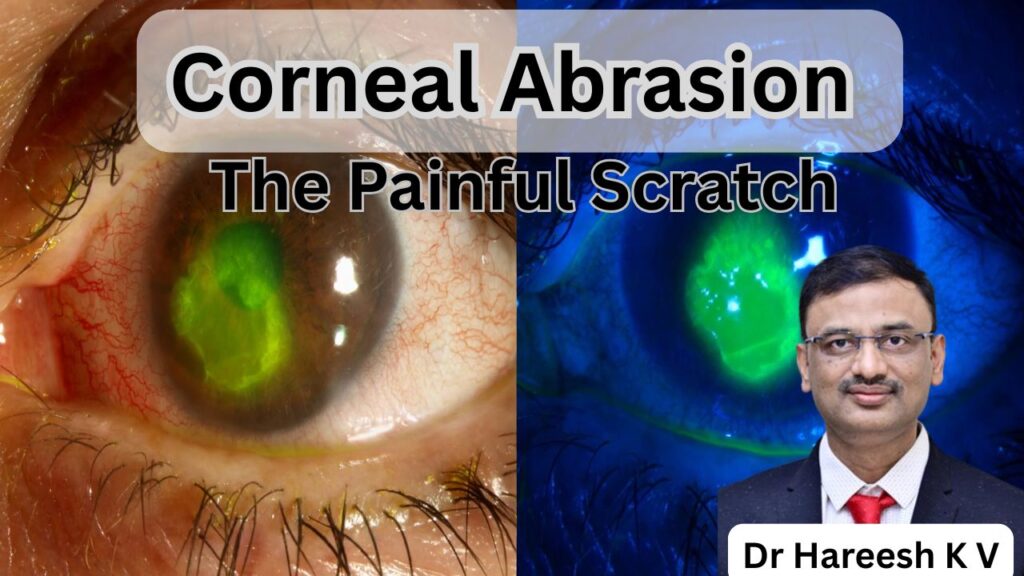

A scratch or injury to the cornea is called a corneal abrasion. Although many minor abrasions heal on their own, an untreated or infected abrasion can sometimes lead to more serious eye problems. Knowing the symptoms and seeking timely care can help protect your vision.
What Causes a Corneal Abrasion?
A corneal abrasion can happen when something scratches or irritates the surface of the eye. Common causes include:
• Dust, sand or other small particles entering the eye
• Accidentally rubbing the eye
• Fingernail scratches
• Contact lens-related injuries
• Makeup brushes or other cosmetic products
• Tree branches or leaves
• Workplace injuries involving wood, metal or other materials
• Foreign objects getting trapped under the eyelid
• Excessive dryness of the eyes
Children may develop corneal abrasions while playing, particularly if they accidentally poke or scratch their eyes.
Recognising the Symptoms
A corneal abrasion can cause symptoms soon after the injury. Common signs include:
• Sharp or burning eye pain
• A feeling that something is stuck in the eye
• Redness
• Excessive watering
• Increased sensitivity to light
• Blurred or hazy vision
• Difficulty keeping the affected eye open
• Swelling around the eye
• Headache in some cases
The sensation of having a foreign body in the eye can persist even after the object that caused the scratch has been removed.
Why Can a Tiny Scratch Hurt So Much?
The cornea has a dense network of nerve endings. These nerves make the cornea extremely sensitive to touch and injury. This is why even a very small scratch can cause considerable pain, watering and sensitivity to light.
The good news is that the surface cells of the cornea can often repair themselves relatively quickly. However, healing depends on the size and depth of the abrasion and whether infection or another eye problem is present.
What Should You Do Immediately?
If you suspect a corneal abrasion, avoid rubbing the eye. Rubbing can make the injury worse.
If a small particle has entered the eye, gently rinse the eye with clean water or sterile saline. Blinking several times may also help remove a loose particle.
However, do not try to remove an object that appears embedded in the eye. Avoid using tweezers, fingers or other instruments.
Contact lens wearers should remove their lenses and avoid wearing them until the eye has healed and an eye-care professional has advised that it is safe to resume wearing them.
When Should You See an Eye Doctor?
Medical attention is particularly important if there is:
• Significant or worsening pain
• Blurred or reduced vision
• Severe sensitivity to light
• Persistent redness or watering
• Discharge from the eye
• An injury involving a chemical or sharp object
• A foreign body that cannot be removed safely
• Symptoms that do not improve
• An eye injury caused by a high-speed object
People who wear contact lenses should be especially cautious because corneal infections can develop more rapidly in some contact lens-related injuries.
How Is Corneal Abrasion Treated?
An eye-care professional may examine the cornea using a special microscope and, when necessary, a dye that makes scratches easier to see.
Treatment depends on the cause and severity of the abrasion. The doctor may recommend lubricating eye drops or ointments to keep the eye comfortable while it heals. In some cases, prescription medication may be needed, particularly when there is concern about infection.
Do not use leftover eye drops or someone else’s eye medication without medical advice. Some eye drops can be harmful when used incorrectly or can mask symptoms of a more serious problem.
Can You Prevent Corneal Abrasion?
Many corneal abrasions can be prevented with simple precautions:
• Wear protective eyewear when working with tools or machinery.
• Use safety glasses when gardening or handling materials that can produce dust or debris.
• Keep children’s fingernails trimmed.
• Avoid rubbing your eyes.
• Handle contact lenses carefully and follow proper cleaning and replacement instructions.
• Keep makeup applicators clean and use them carefully.
• Protect your eyes from dust and flying particles in the workplace.
• Don’t Ignore Persistent Eye Pain
A corneal abrasion may be a small injury, but the discomfort can be significant. More importantly, symptoms that appear to be a simple scratch can sometimes indicate a deeper injury or infection.
If eye pain, redness, light sensitivity or blurred vision persists after an eye injury, professional evaluation is the safest approach. Early attention can help prevent complications and protect your vision.
Did You Know?
The cornea has no blood vessels. It receives oxygen mainly from the air and nutrients from tears and the fluid inside the eye. Despite this, its surface cells can often repair minor injuries relatively quickly.
Also read articles of Dr Hareesh K V


Dr Hareesh K V
Medical director
Abhishek Nethradhama
Krupa Bindu, No.971/37, Mig 15Th A Cross, A Sector
Khb High Rise Apartment
Ambedkar Colony, Yelahanka New town
Bengaluru -64
Ph: 080-4093 3219/77957 15203
Eye Hospital in Yelahanka new town – Abhishek Nethradhama