One in five women in India suffer from Rheumatic Ailment: COPCORD data Survey findings showed that 65% of the Indians suffering from arthritis pains are women.

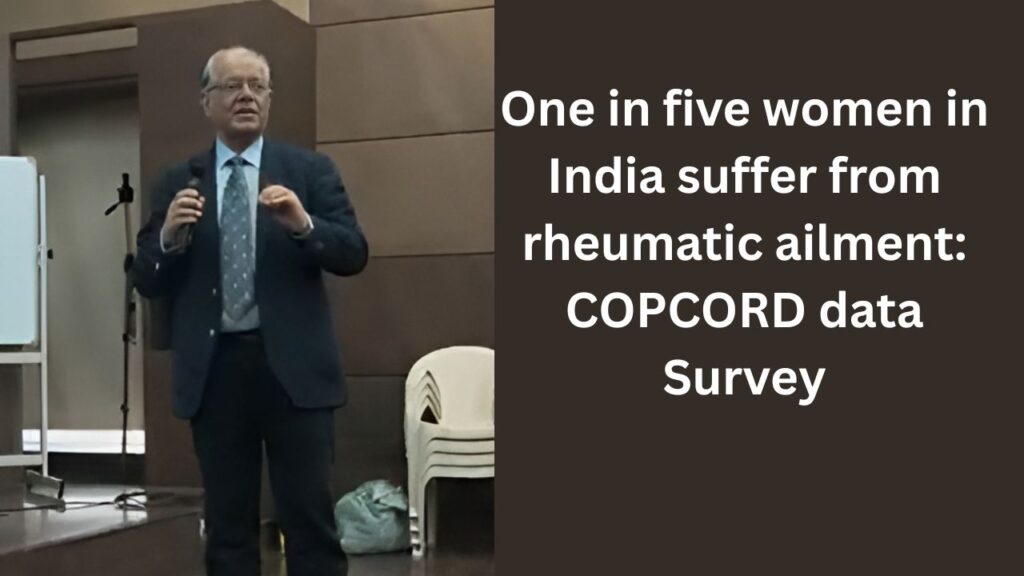
Ahmedabad: More than 20%, or one in five Indian women, suffer from bone and joint pain of rheumatic nature, according to World Health Organization’s (WHO) Community Oriented Programme for Control of Rheumatic Diseases (COPCORD) and leading rheumatology experts.
The survey of prevalence and risk factors of arthritis was led by Dr. Arvind Chopra, Director and Chief Rheumatologist, Center for Rheumatic Diseases, Pune, and Ayush Distinguished Scientist Chair for Public Health and Epidemiology, Government of India. The findings, based on a pooled analysis of data from a survey of more than 56,500 people in 21 urban and rural sites, were published in the International Journal of Rheumatic Diseases recently.
The findings based on simple extrapolation of study outcome data to the Indian population showed that 12.71 crore, or 65% of the 19.52 crore Indians suffering from arthritis pains, are women. The survey found that around 20-22% of women in India suffer from some kind of bone and joint pain of rheumatic nature.
More than 42.2 lakh Indias, of whom 35.1 lakh are women, suffered from rheumatoid arthritis, a potentially serious, crippling and extremely painful complex arthritis requiring special treatment. Rheumatoid arthritis is also a known cause of premature heart attacks and death. Around 11.7 lakh women suffering from rheumatoid arthritis were estimated to be young and in their reproductive age group, a number very high compared to other countries.
The survey findings were also presented and discussed during the two-day academic conclave organised in Ahmedabad by the Rheumatology Association Gujarat (RAG) and IIPH & Center for Rheumatic Diseases, Pune, on November 15 and 16. The conclave brought together leading experts, clinicians, researchers, and postgraduate students for learning, collaboration, and scientific exchange.
The two-day conclave has also announced the beginning of a new COPCORD survey, which will screen around 7,000 people in rural parts of Gujarat. The survey will focus on the incidence and prevalence of all kinds of rheumatic disease, not just arthritis. The data collection and publication will take around 6-8 months.
Sharing her insights, Dr. Reena Sharma, President of Rheumatology Association Gujarat, said, “Rheumatic and musculoskeletal disorders are among the most prevalent and burdensome conditions in India, but are neglected and under-reported. With crores of people in India, most of them women, living with arthritis-related pain, there is an urgent need for greater awareness, better integration between modern and traditional systems, and stronger clinical collaboration.”
According to the findings, 5.4 crore Indians live with osteoarthritis, commonly affecting the knees and spine. Osteoarthritis and lower back pain are the most common causes of disability. More than 1.72 crore people experience diffuse or localised musculoskeletal pain due to causes ranging from occupational strain, mental stress, age, poor lifestyle, and personal habits, including misuse of mobile phones. Manual labour, obesity, tobacco consumption, and low socio-economic status are among the other key risk factors. Moreover, arthritis pain was the number one self-reported illness amongst all recorded illnesses such as diabetes, hypertension, and stomach ailments.
Dr. Arvind Chopra, who has been conducting COPCORD surveys since 1996 and is the Chief Coordinator of India in global COPCORD studies, said, “Arthritic ailments are on the rise in India due to a variety of factors. It is not limited to urban areas but is also becoming a huge problem in rural areas. This conclave is an important step forward in understanding the burden and societal impact of arthritis in India, and in developing effective strategies for prevention and control of arthritis and related disorders by bringing together diverse disciplines.”
The conclave highlighted scientific sessions addressing critical frontline challenges such as Epidemiology and management of chikungunya fever and post-chikungunya arthritis, Common clinical dilemmas in patients with pre-existing autoimmune rheumatic disease, Burden of arthritis, Ayurvedic perspective on arthritis, and others.
Another highlight of the conference was the Scientific Writing Workshop, offering young clinicians and researchers’ practical insights into medical publishing.
The faculty and PG students from Medicine and Rheumatology, Community Medicine and Kayachikitsa (Ayurveda) from several medical institutions and colleges participated in the meeting.
Similar integrative meetings were organised in New Delhi, Pune, Gorakhpur, and Varanasi during August and October 2025 to discuss arthritis and increase awareness and knowledge in the community and medical faculty.


